
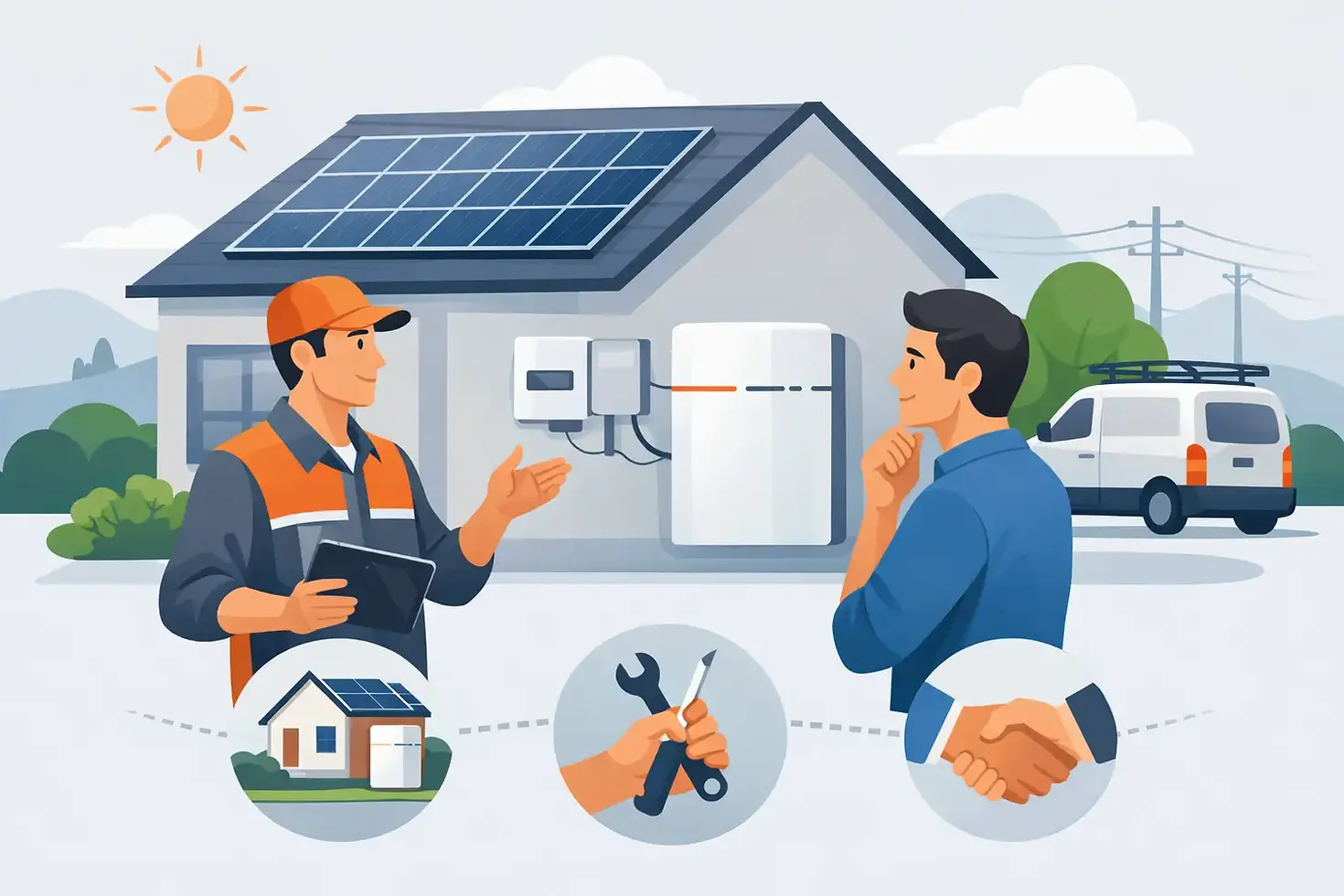
Choosing an Enphase Battery System Installer
A battery system can look straightforward on paper. A few storage units, an inverter, an app, and lower reliance on the grid. In practice, the quality of the outcome often comes down to the enphase battery system installer you choose, because battery storage is only as effective as the design, commissioning, and long-term support behind it.
For homeowners and businesses, that decision matters for more than convenience. A well-installed battery system can help reduce imported electricity, improve resilience during outages, and make better use of solar generation across the day. A poorly planned installation can leave you with limited usable capacity, awkward integration with existing solar, or a system that never quite performs as expected.
Why the installer matters as much as the battery
Battery storage is not a plug-and-play upgrade. Every property has its own usage profile, tariff structure, distribution board arrangement, and future energy demands. If you are adding battery storage to an existing solar PV system, compatibility becomes even more important. If you are installing solar and battery together, the design choices made at the start will shape performance for years.
That is why an enphase battery system installer should do more than quote for equipment. They should assess how and when your property uses electricity, whether your current system is suitable for battery integration, and what level of backup or load support you actually need. A larger battery is not always better. In some cases, a right-sized system with better control settings delivers stronger value than simply adding more capacity.
The installer also carries responsibility for electrical safety, notification requirements, commissioning, and user handover. If these steps are rushed, customers are left with a premium product that does not feel premium in day-to-day use.
What to expect from an Enphase battery system installer
A reliable installer starts with site-specific advice. That means asking sensible questions about your electricity bills, your solar generation if you already have it, whether you charge an electric vehicle, and whether backup power is a priority or simply a nice extra.
From there, they should explain how the Enphase system fits your property rather than forcing your property to fit the product. For some households, battery storage is mainly about evening self-consumption. For others, it is about tariff optimisation and reducing peak-rate imports. Commercial sites may be more focused on managing daytime demand, supporting critical loads, or improving the value of on-site generation.
The best advice is usually clear, not overly technical. You should be able to understand what you are getting, how the system will operate, what savings are realistic, and where the limitations are.
System design should be tailored, not generic
No two properties use energy in exactly the same way. A family home with daytime occupancy has very different battery needs from a warehouse with weekday operating hours or an office with significant evening consumption. The installer should size the system around real demand patterns, not assumptions.
They should also factor in future changes. If you are planning to add an EV charger, a heat pump, or more solar panels later, the battery design should reflect that. It is often more cost-effective to plan for expansion at the outset than to retrofit around a constrained system later on.
Integration with solar and home energy management
Enphase is widely recognised for its smart energy ecosystem, especially where battery storage is paired with solar and monitoring. That can be a real advantage, but only if the installation is configured correctly.
A competent installer should understand how generation, storage, and household consumption interact in the app and at the consumer unit. They should also explain what the monitoring will show you, what level of control you have, and how system behaviour may change between summer and winter.
That matters because customer satisfaction often depends on visibility. When people can clearly see how much solar they are storing and using, they are more likely to feel the value of the investment.
Questions worth asking before you appoint an installer
It is reasonable to ask direct questions. In fact, it is one of the best ways to separate experienced specialists from contractors who have simply added batteries to their service list.
Ask whether they have recognised accreditations relevant to solar and battery installation. Ask who carries out the electrical work and commissioning. Ask what support is available after installation if the system needs adjustments or fault-finding. Ask how they approach system sizing and whether the proposal is based on actual usage data.
You should also ask about backup capability. Not every battery setup provides the same level of resilience during a power cut, and not every property can support whole-property backup. An honest installer will explain the difference between essential load backup and broader coverage, along with any practical constraints.
Price matters, but value matters more. A lower quote can sometimes reflect less design work, limited aftercare, or compromises in installation quality. With battery storage, those compromises can be expensive to correct later.
Common mistakes when choosing an Enphase battery system installer
One of the most common issues is treating battery storage as a commodity purchase. Customers compare headline capacity and total cost without looking closely at design assumptions, installation scope, or support standards. Two quotes may appear similar while delivering very different outcomes.
Another mistake is overlooking aftercare. Battery systems are smart, connected products. They may need software updates, performance checks, or advice as your energy usage changes. Choosing an installer with a proper service-led approach gives you somewhere to turn if your system needs attention after handover.
There is also a tendency to overestimate savings if the proposal has not been built around real consumption patterns. If most of your electricity use happens overnight and your solar generation is modest, battery payback may look different from a south-facing home with strong daytime generation. A good installer will be realistic about this. Credible advice builds trust far better than inflated promises.
Why local knowledge can make a difference
For customers in Essex, Kent, and Sussex, local coverage is not just a convenience. It can improve survey quality, responsiveness, and long-term support. A local installer is more likely to understand the property types in the area, common grid considerations, and what practical access or installation challenges may arise on site.
That local presence also matters after the system is fitted. If you need support, expansion, or additional technologies such as EV charging, it helps to work with a company that can manage the whole energy setup rather than treating the battery as a standalone job.
This is where a consultative installer stands apart. Instead of viewing battery storage in isolation, they look at your wider energy picture and recommend a system that supports both current needs and future plans. For many customers, that joined-up approach leads to a better return over time.
The value of credentials and brand approvals
When you are trusting a contractor with a high-value electrical installation, credentials should never be an afterthought. Relevant accreditations and recognised brand approvals indicate that the installer works to established technical and consumer protection standards.
That does not mean every accredited installer is equal, but it does give you a stronger starting point. It shows a level of commitment to quality, compliance, and ongoing professional standards that should not be taken for granted.
For customers comparing providers, this can be particularly reassuring when paired with a clear design process and a strong aftercare offer. Angus Renewables takes that approach seriously, combining tailored system design with accredited delivery and practical support that continues after installation.
Is an Enphase battery right for every property?
Not always, and that is exactly the kind of answer a trustworthy installer should be prepared to give. The right battery solution depends on your existing solar setup, your usage profile, your budget, and your priorities.
If your main goal is bill reduction, the system needs to be sized around savings potential rather than marketing claims. If resilience matters most, backup requirements need to be assessed properly. If you are planning a broader energy upgrade, the battery should fit into that wider strategy.
The strongest installations are built around what the property actually needs. That is why choosing the right installer is so important. Good hardware deserves good design, careful installation, and support you can rely on when it counts.
If you are considering battery storage, take the time to choose a provider that treats your project as a tailored energy solution rather than a standard package. The right advice at the start usually makes all the difference later.



Comments