

How Home Solar Panels Work in Practice
Most people start with the same question once they see energy bills climbing: how home solar panels work, and whether the savings are really as straightforward as they sound. The short answer is that solar panels turn daylight into usable electricity for your property. The more useful answer is that a well-designed system does much more than sit on a roof - it generates power, manages how that power is used, and can be paired with battery storage to give you greater control over your energy costs.
For homeowners and property managers, understanding the basics matters because solar is not a one-size-fits-all product. Output depends on your roof, your usage patterns, your equipment, and the quality of the design and installation. Get those elements right, and solar becomes a cost-effective, long-term asset rather than just another home upgrade.
How home solar panels work from roof to socket
A solar PV system works by converting sunlight into electricity. The panels on your roof contain photovoltaic cells, usually made from silicon. When daylight hits those cells, it creates an electric current. That electricity begins as direct current, or DC, which is not the form most homes and businesses use for everyday appliances.
That is where the inverter comes in. The inverter converts DC electricity into alternating current, or AC, so it can power lighting, refrigeration, office equipment, machinery, and the rest of the electrical demand across the property. In simple terms, the panels generate the electricity and the inverter makes it usable.
Once converted, the electricity flows into your property’s electrical system. If the solar system is producing power at the same time your building is using it, that solar electricity is consumed first. This is one of the key financial advantages of solar PV - every unit of electricity you use from your own system is electricity you do not need to buy from the grid.
If your panels generate more electricity than you need at that moment, the excess can either be exported to the grid or stored in a battery, depending on the setup. If your system is producing less than your property needs, the remaining electricity is imported from the grid as normal.
The main parts of a home solar system
Although the panels get most of the attention, a reliable solar installation depends on several components working together properly.
The solar panels are the generation source. Their job is to capture daylight and produce DC electricity. Panel quality matters here, but so does panel placement. A premium panel fitted badly will not perform as well as a properly specified panel installed in the right position.
The inverter is the system’s control point for converting electricity. Depending on the design, you may have a string inverter, microinverters, or optimisers paired with an inverter. The best option depends on the roof layout, possible shading, and how much monitoring and flexibility you want.
The mounting system secures the panels to the roof. This is often overlooked by customers comparing quotes, but it has a direct impact on longevity and safety. Roof type, wind loading, and weather exposure all need to be considered.
Your generation meter and monitoring platform track how much electricity the system is producing. Monitoring is especially useful because it shows how the system performs over time and can highlight any drop in output early.
If battery storage is included, the battery stores surplus electricity for use later in the day, such as in the evening when the panels are no longer producing. This can improve self-consumption and reduce reliance on imported electricity.
Why daylight matters more than heat
One of the most common misconceptions is that solar panels need hot weather to work well. In reality, solar PV systems work from daylight, not heat. Panels generate electricity whenever there is sufficient light, which is why they still produce power on cloudy days.
Bright, direct sunshine will usually increase output, but cooler conditions can actually help electrical efficiency. That is useful in the UK, where solar remains highly effective despite the weather being far from tropical. A professionally designed system takes local conditions into account and estimates realistic annual generation rather than relying on best-case assumptions.
What happens during the day
Solar generation usually follows a simple pattern. Output rises in the morning, peaks around the middle of the day, and falls again in the late afternoon and evening. Your savings depend not just on how much electricity the system generates, but on when your property uses electricity.
A household that is empty for much of the day may export more of its solar unless it has battery storage or can shift usage to daylight hours. By contrast, a home office, retail site, workshop or industrial unit with daytime demand may use a larger share of the electricity directly as it is generated.
This is why system design should be based on actual consumption habits rather than roof size alone. A tailored solution can improve return on investment by matching system capacity, battery storage and usage patterns more closely.
How battery storage changes the picture
Battery storage does not make the panels produce more electricity, but it can make the system work harder for you. Without a battery, excess daytime generation is usually exported. With a battery, some of that spare electricity can be stored and used later.
For many properties, this is where solar becomes more flexible. Evening demand is often when households need electricity most, yet it is also when the panels have stopped generating. A battery helps bridge that gap. It can also provide a level of resilience during grid disruption if the system is designed with backup capability, although not every battery setup offers this as standard.
There is a trade-off, of course. Adding battery storage increases the upfront investment. Whether it makes financial sense depends on energy usage, tariff structure, export rates and the customer’s priorities. Some clients want the fastest payback. Others place equal value on energy independence and control.
What affects solar panel performance
If you are comparing systems, it helps to know that panel wattage is only part of the story. Real-world performance depends on several factors.
Roof orientation and pitch play a major role. South-facing roofs often produce the highest generation in the UK, but east and west-facing roofs can still perform very well, particularly when the aim is to spread generation across more of the day.
Shading is another important factor. Trees, chimneys, neighbouring buildings and roof features can all reduce output. In some cases, shading can be managed effectively through system design and component choice.
System sizing matters too. A larger system may generate more electricity overall, but that does not automatically mean better value if much of that power is exported rather than used on site. The best system size is the one that reflects your available roof space, consumption profile and future plans, such as adding an EV charger or battery later.
Installation quality has a direct impact on both performance and reliability. Proper cable routing, secure mounting, correct inverter configuration and compliance with relevant standards all matter. This is why accreditation, technical experience and product quality should weigh heavily in any purchasing decision.
Why bespoke design matters
The reason many people ask how home solar panels work is because they want a clear answer before making a significant investment. The technical process itself is straightforward. The complexity comes from making the system suit the property.
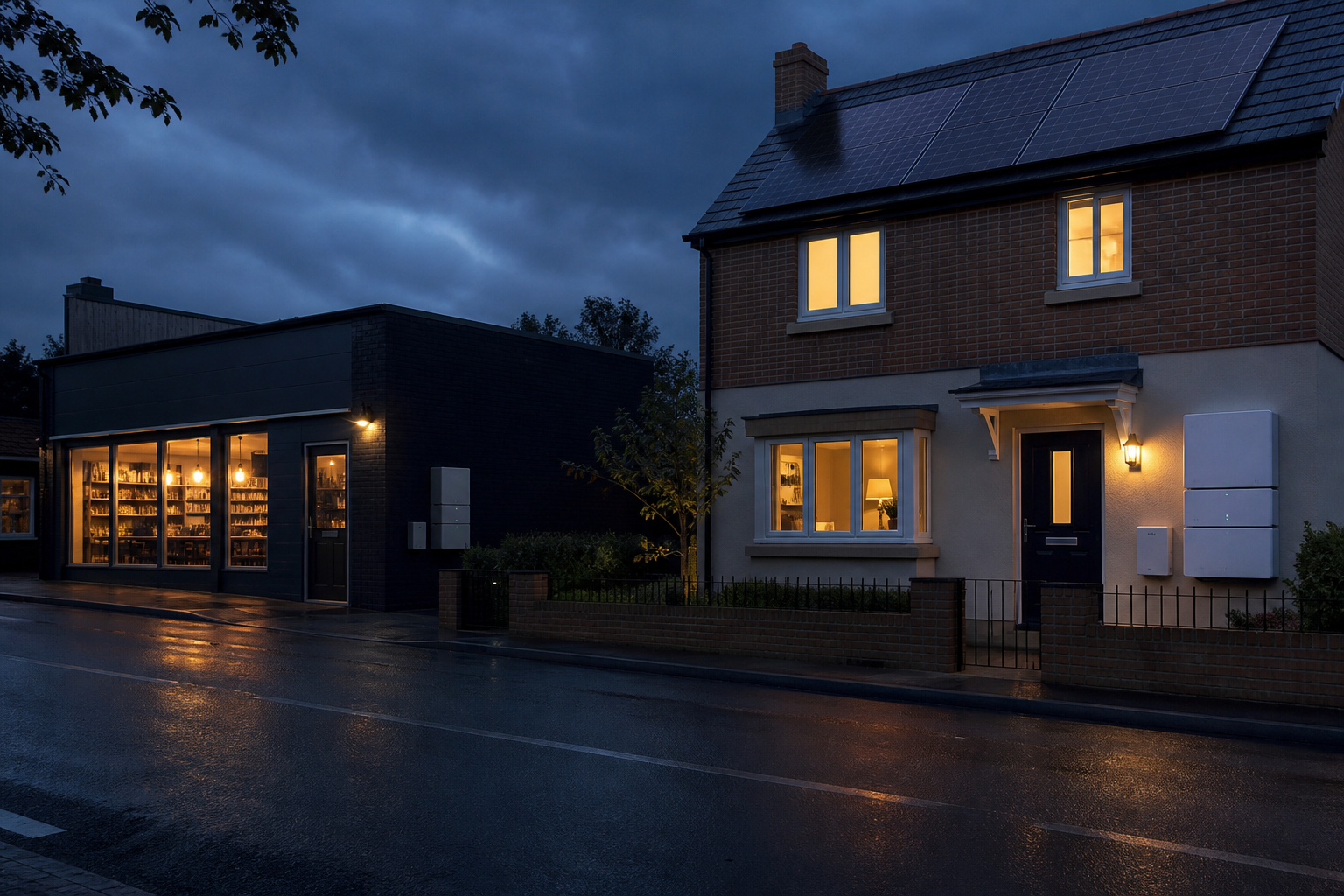
Two houses on the same street can need completely different solutions. One may have perfect roof space but low daytime usage, making battery storage especially useful. Another may have partial shading and need a more flexible inverter setup. A larger property may want to integrate solar with EV charging, while a commercial site may prioritise daytime self-consumption and long-term operational savings.
That is why a consultative approach matters. At Angus Renewables, the focus is on tailored solutions built around the property, the load profile and the customer’s long-term goals, using premium components and accredited installation standards rather than a standard package dropped onto every roof.
Is solar worth it if you still use the grid?
Yes, for many properties it is. Solar does not usually replace the grid entirely unless you are designing a very specific off-grid system. For most homes and businesses, the aim is to reduce imported electricity, improve energy resilience and protect against rising prices over time.
The value comes from producing part of your own electricity and reducing exposure to volatile energy costs. The more effectively your system is designed around your usage, the stronger that value tends to be. Add battery storage or EV charging where appropriate, and the benefits can become even more practical day to day.
If you are considering solar, the useful question is not simply whether panels work. It is whether the system can be designed to work well for your property, your energy habits and your future plans. That is where good advice makes all the difference.


Comments