
Solar and EV Charger Package Explained
If you already own an electric vehicle, or you are planning to buy one soon, the way you charge it matters almost as much as the car itself. A solar and EV charger package gives you a practical way to use your own electricity for driving, rather than relying heavily on grid power at unpredictable rates. For homeowners and businesses alike, that can turn a good renewable investment into a far more cost-effective one.
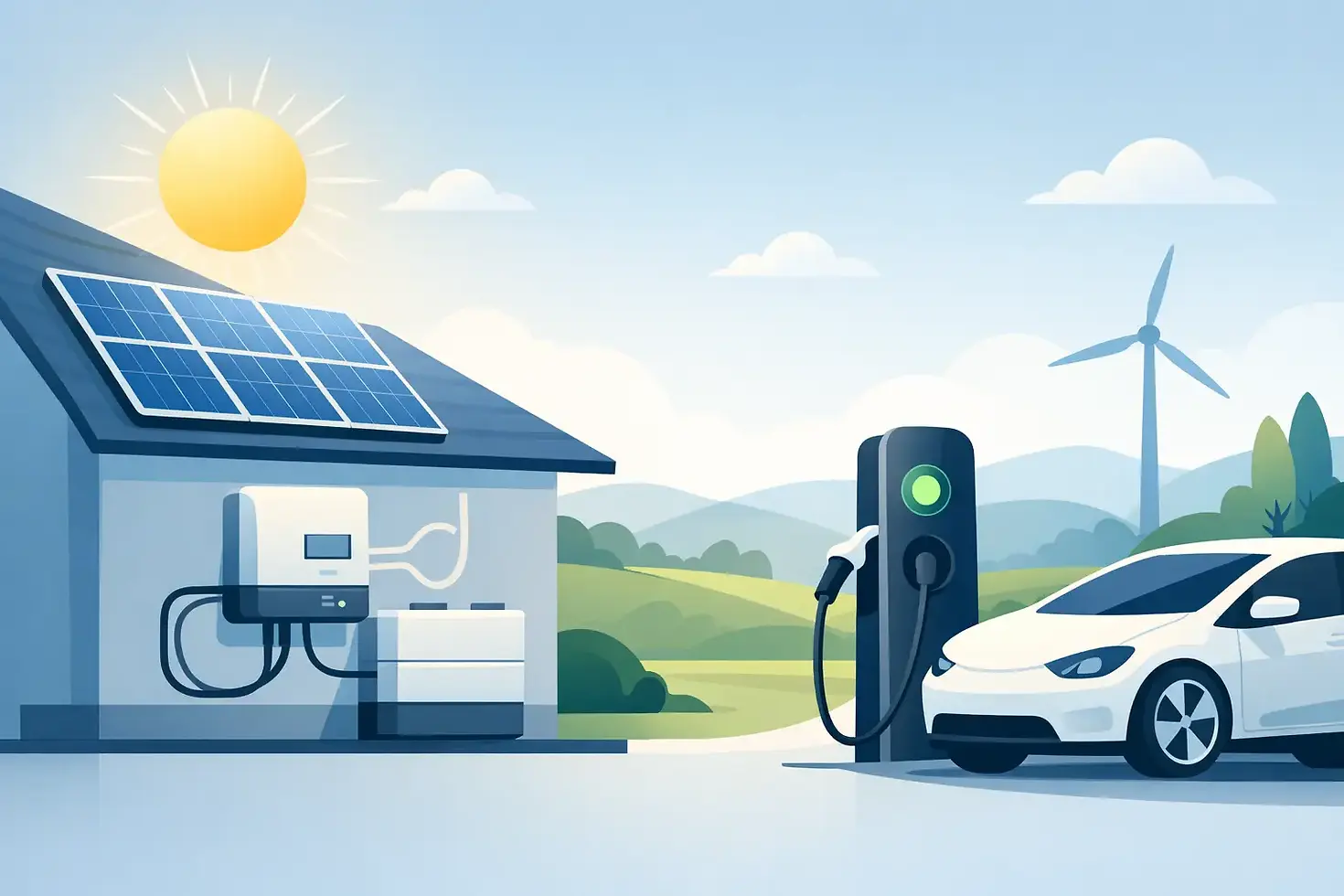
The appeal is straightforward. Solar panels generate electricity during the day, and an EV charger gives that electricity a useful destination. Instead of exporting more power than you need, you can direct part of that generation into your vehicle. Done properly, the result is lower running costs, better use of your solar output, and a system designed around how your property actually uses energy.
What a solar and EV charger package includes
At its simplest, the package combines a solar PV system with a dedicated electric vehicle charging point. In many cases, it also makes sense to include battery storage, smart monitoring and load management so the system can respond intelligently to your usage patterns.
That matters because not every property generates and consumes electricity in the same way. A family home with one EV and predictable daytime usage needs a different setup from a commercial unit with multiple vehicles, refrigeration loads or shift-based operations. The value is not in bundling products for the sake of it. The value comes from designing a coordinated system where each part supports the others.
A well-planned package typically considers roof space, inverter capacity, charger speed, vehicle charging habits, export levels and whether battery storage would improve performance. It should also account for the electrical characteristics of the site, because charger installation is not just a case of fitting a box on the wall.
Why package solar with an EV charger
The strongest reason is financial. Charging an EV from self-generated solar can be significantly cheaper than charging from the grid, particularly when electricity prices are high. If you already have solar, adding an EV charger can increase the amount of energy you use on site. If you are starting from scratch, combining both technologies from the outset often leads to a more coherent design and a smoother installation process.
There is also a practical advantage. Separate installations can work perfectly well, but they are not always optimised to communicate with one another. A joined-up approach makes it easier to prioritise solar charging, monitor performance and plan for future additions such as battery storage.
For some properties, resilience is part of the decision too. Businesses with fleet vehicles or operational demands may want greater control over energy costs and less exposure to price volatility. Homeowners may simply want a system that makes day-to-day charging more affordable without overcomplicating the technology.
How the right solar and EV charger package is designed
This is where one-size-fits-all solutions usually fall short. A package should start with your property, not a preset product list.
For a home, the key questions are often quite practical. How many miles do you drive each week? Is the vehicle usually at home during daylight hours? Do you work from home, or is the car typically away until evening? How much roof space is available, and are there any shading issues? Those details affect whether solar alone will cover a meaningful share of charging, or whether battery storage would make better use of generation from earlier in the day.
For commercial and industrial sites, the design process is broader. Energy demand profiles, operating hours, vehicle dwell times and site infrastructure all matter. A charger that suits a domestic driveway will not suit a depot or workplace with multiple users and heavier demand. Likewise, the solar array needs to be sized in relation to wider consumption, not just the charging point.
The best outcomes usually come from tailored system design, premium components and proper integration. That means checking the supply capacity, selecting the right charger specification and ensuring the solar system is built to support real usage patterns rather than estimated averages alone.
Is battery storage worth adding?
Sometimes yes, sometimes no. It depends on when you generate power and when the vehicle is available to charge.
If your EV is parked on the drive through much of the day, solar can feed charging directly and battery storage may be less critical. If the vehicle returns in the evening, a battery can store excess daytime generation so you can still use your own power later. That can improve self-consumption and reduce the amount of electricity you import at peak rates.
For businesses, battery storage can also help balance loads and support more stable site energy management. However, it adds cost, so it should be assessed properly rather than treated as an automatic upgrade. In some cases, the right answer is a solar and EV charger package now, with battery readiness built in for a later phase.
What savings can you realistically expect?
Savings depend on several factors, including your current electricity tariff, your mileage, the size of the solar array and how much of your charging can be matched to on-site generation. Anyone promising a fixed figure without looking at those variables is simplifying the picture too much.
That said, the savings can be meaningful. If a good portion of your annual charging is supplied by solar, your cost per mile can fall noticeably. Over time, that improves the return on both the solar installation and the charger. For businesses with regular vehicle use, the cumulative effect can be even more significant.
There is another financial angle as well. Exporting surplus electricity can provide value, but using your own generation is often the stronger return. A package that increases self-use can therefore improve the economics of the system overall.
Common mistakes when choosing a package
The most common issue is underspecifying or overspecifying the system. An array that is too small may not contribute enough to make a visible difference to charging costs. A charger chosen without considering the site's electrical capacity can create unnecessary complications. In other cases, customers are sold a package that looks attractive on paper but does not reflect how the property operates.
Another mistake is focusing only on upfront price. Lower-cost equipment can be tempting, but reliability, warranty support and system compatibility matter. A renewable energy installation should be built for long-term performance, not just immediate savings on day one.
Installation quality is equally important. Solar PV, battery storage and EV charging all involve compliance, safety and performance considerations. Accredited workmanship and proper commissioning are not optional extras. They are central to whether the system performs as intended.
Why accreditation and equipment quality matter
When you are investing in a solar and EV charger package, credentials should carry weight. Installers with recognised accreditations and experience across solar, batteries and chargers are better placed to deliver a complete system safely and efficiently.
Quality equipment matters for the same reason. Premium components typically offer stronger monitoring, better efficiency, more dependable warranties and smoother integration across the system. That becomes particularly valuable when your installation includes several technologies that need to work together over many years.
For customers in Essex, Kent and Sussex, confidence often comes from knowing the provider can manage the process end to end - from site assessment and system design through installation and aftercare. That is where a consultative approach makes a real difference. Angus Renewables focuses on tailored solutions rather than off-the-shelf packages, because the right result depends on the site, the usage profile and your longer-term plans.
Who should consider a solar and EV charger package?
The obvious fit is a homeowner who wants to cut the cost of charging an EV while making better use of rooftop solar. But the opportunity is just as relevant for businesses with staff parking, fleet vehicles or high daytime energy use.
It can also suit property owners who are planning ahead. If you are installing solar now but expect to switch to an EV soon, it often makes sense to prepare the system accordingly. Likewise, if you already have an EV charger but are unhappy with ongoing charging costs, solar may be the missing part of the setup.
The main question is not whether the technology works. It does. The real question is how to configure it so it works efficiently for your property and your budget.
A good package should feel considered from the start - correctly sized, professionally installed and ready to support the way you live or operate. When that happens, your roof is not just generating electricity. It is helping power the miles ahead in a smarter, more cost-effective way.



Comments