

Improving Solar Output in Winter: 7 Practical Steps
A clear, cold winter morning can be surprisingly productive for a solar PV system. The challenge is not usually temperature - solar panels often operate efficiently in cool conditions - but the shorter days, lower sun angle, cloud cover and seasonal shading. Improving solar output in winter is therefore about making the most of every available hour of daylight, while ensuring the energy generated is used or stored intelligently.
For homeowners and businesses across Essex, Kent and Sussex, winter performance starts with realistic expectations. A well-designed system will generate less electricity between November and February than it does in summer. That is normal. The practical opportunity is to reduce avoidable losses and make the system work harder for the property when grid electricity is often at its most valuable.
1. Keep panels clear, but do not take unnecessary risks
Leaves, bird droppings and accumulated grime can restrict the amount of light reaching solar cells. In winter, when daylight is already limited, a partially obscured panel can have a more noticeable effect on generation than it would in July.
Visual checks from ground level are a sensible starting point. Look for leaves collecting around the lower edge of panels, obvious debris or anything casting a new shadow. Rain will often remove light dirt, especially on a suitably pitched roof, so routine cleaning is not always necessary. However, properties near trees, agricultural land, busy roads or the coast may benefit from professional inspection and cleaning.
Avoid climbing onto a roof or using abrasive tools, household detergents or high-pressure equipment. Aside from the safety risk, incorrect cleaning can damage panels, seals or cabling. A qualified maintenance visit is the safer option where access is difficult or there is a genuine concern about soiling.
2. Check for winter shading before it becomes a bigger problem
Low winter sun creates longer shadows. A chimney, dormer, neighbouring building or tree that has little effect in summer may shade panels for several hours in December. Even a narrow shadow can affect output, particularly on older string inverter systems where panels are connected in groups.
Start by observing the roof at different points during the day. Pay particular attention to mid-morning and early afternoon, when a low sun may sit behind nearby obstacles. Trees deserve regular review: seasonal growth, not just leaves, can gradually change the amount of light reaching the array.
Pruning may help where it is permitted and appropriate, but it is not the only answer. For systems with persistent partial shading, optimisers or microinverters can sometimes improve performance by allowing less-affected panels to operate more independently. Whether an upgrade is worthwhile depends on the layout, inverter type, remaining warranty and the scale of the loss. A proper assessment should come before any hardware change.
Improving solar output in winter through monitoring
Your monitoring app is one of the most useful tools you already own. It cannot create extra sunlight, but it can reveal whether the system is producing as expected and highlight faults early.
Compare generation with the same period in the previous year, rather than comparing a grey January day with a bright day in May. Also account for changes around the property, such as a new extension, taller trees or a recently fitted roof feature. A gradual year-on-year reduction may point to shading or soiling. A sudden, significant drop may indicate a fault, communication issue or inverter problem.
Check that the inverter is online and that the app is receiving current data. If an inverter displays an error message, is switching off repeatedly or reports generation that appears unusually low, arrange an inspection. Leaving a fault unresolved through winter can mean missing a problem that becomes more costly or inconvenient later in the year.
Commercial and industrial sites should give this monitoring a named owner. A quick monthly review of generation, consumption and battery performance can identify issues before they affect budgets or operational planning.
3. Move electricity use into daylight hours
Winter solar generation is concentrated into a shorter window, often around the middle of the day. The more of that electricity a property uses as it is generated, the less needs to be imported from the grid.
This is where simple timing makes a material difference. Set dishwashers, washing machines and tumble dryers to run when the array is generating, where practical and safe. Consider scheduled heating of a hot-water cylinder through a suitable diverter. Businesses may be able to time battery charging, equipment run-times or non-critical processes around expected generation.
The right approach depends on the property. A family home with occupants out during the day may gain more from battery storage than from manually shifting loads. A business with daytime demand may already use much of its solar generation directly. Monitoring data provides the evidence needed to make a sound decision rather than relying on assumptions.
4. Review battery settings for shorter days
Battery storage does not increase the amount of solar electricity produced, but it can greatly improve the value gained from winter generation. It stores surplus daytime electricity for use after sunset, when household or business demand often rises and grid electricity may be more expensive.
Winter settings need to reflect the reality of lower generation. If a battery is regularly empty before the evening peak, a tariff-based charging schedule may help maintain a useful reserve. If the property is on a time-of-use tariff, charging from cheaper overnight electricity and using that energy at peak times can reduce costs, even on dull days.
There is a trade-off. Preserving a large emergency reserve improves resilience during a power cut but leaves less battery capacity available for daily savings. The best setting depends on whether the priority is backup power, bill reduction or a balance between both. A tailored review can configure the system around how the property actually operates, rather than applying a generic profile.
5. Make sure the inverter and electrical installation are healthy
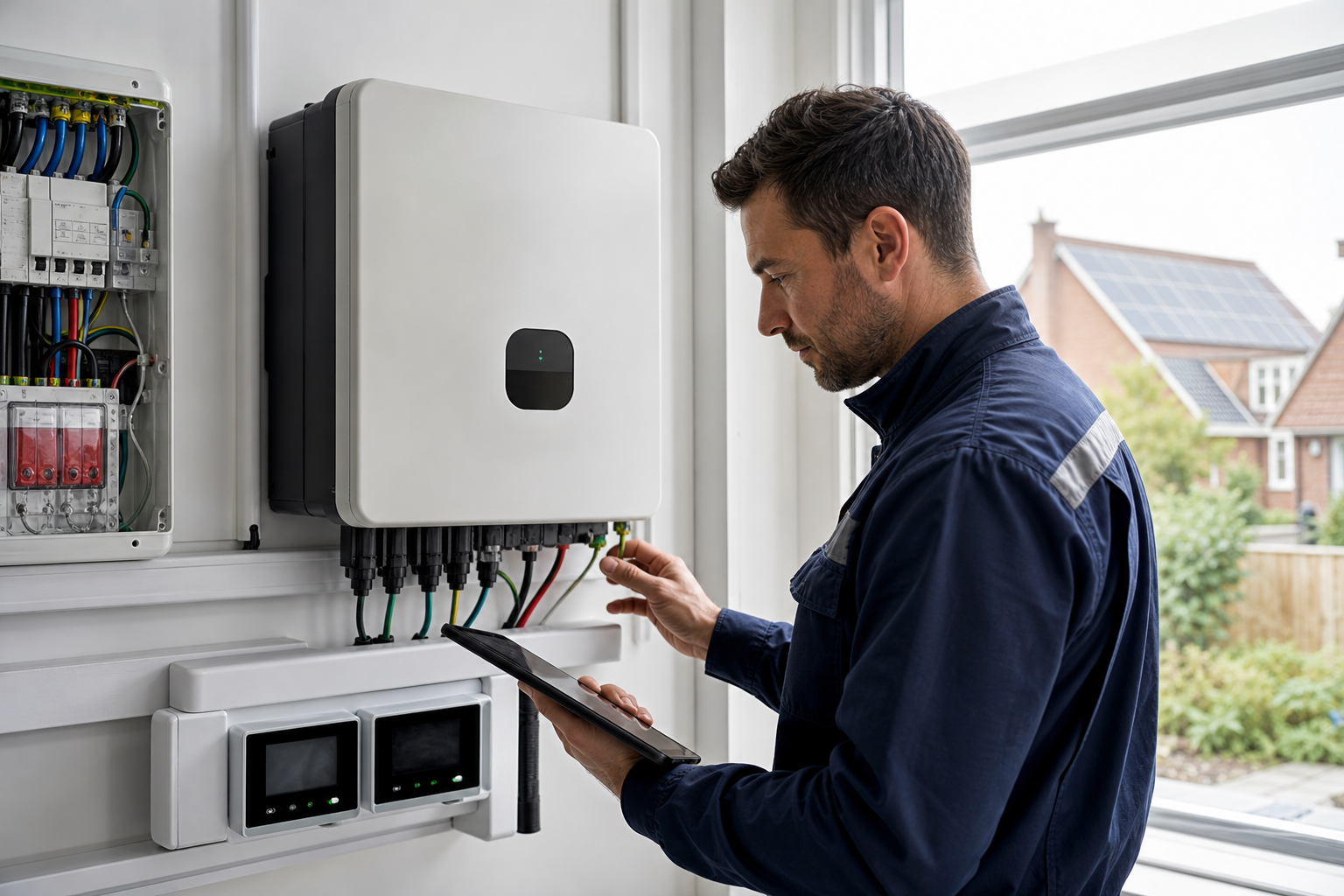
Solar panels receive most of the attention, but the inverter is the system’s working centre. It converts the direct current generated by the array into usable electricity. Inverters have a finite service life, and ageing equipment can become less reliable or less capable of supporting a battery, EV charger or additional panels.
A maintenance check can examine inverter operation, generation history, connections, isolators and visible cable condition. It is also a good opportunity to confirm that labels, shutdown procedures and monitoring access remain correct, particularly after a change of ownership or building work.
For older installations, an inverter replacement may offer better monitoring, improved shade management and compatibility with modern battery technology. It is not automatically the right move simply because winter output is lower, but it can be a cost-effective upgrade where equipment is nearing the end of its working life or limiting the wider system.
6. Consider whether the array was designed for year-round needs
A solar PV system should be designed around annual generation, roof characteristics and the property’s electricity profile - not just its maximum output on a summer day. If electricity use has increased since installation, an existing array may no longer match demand.
Common changes include installing an electric vehicle charger, moving to electric heating, adding air conditioning, extending a commercial unit or changing working patterns. In these cases, adding panels, battery capacity or smarter controls may produce a more meaningful improvement than trying to extract marginal gains from the original system.
Roof orientation also matters. South-facing panels typically deliver the highest annual generation, but east- and west-facing arrays can produce useful power earlier and later in the day. A mixed orientation may suit properties with morning and evening demand, while a business with strong midday consumption may benefit from a different design. There is no single best layout for every roof.
7. Plan maintenance before peak-generation season
Winter is an excellent time to identify and resolve issues, because any maintenance work completed now helps put the system in a stronger position for spring and summer. Waiting until output is visibly disappointing in peak season can mean losing valuable generation while an inspection or repair is arranged.
At Angus Renewables Ltd, system reviews focus on practical performance: the condition of the existing installation, the property’s changing energy use, monitoring data and opportunities for battery or EV charger integration. The aim is not to sell unnecessary equipment, but to recommend a cost-effective system that supports lower bills and greater energy independence over the long term.
Winter will always bring shorter solar days, but poor performance should never be accepted without question. Keep an eye on generation, investigate new shading, use energy when the system is producing and review whether your battery and equipment still suit the property. A well-maintained, well-configured solar system turns even limited winter daylight into a useful part of your energy plan.


Comments