

Solar Inverter Fault Diagnosis Made Clear
A solar system can appear perfectly normal from ground level while quietly producing far less electricity than it should. A warning light, a blank generation graph or an unfamiliar code on the inverter display can all point to different issues. Effective solar inverter fault diagnosis starts by separating a temporary operating condition from a fault that needs professional attention.
The inverter is the working centre of a solar PV system. It converts the direct current produced by the panels into the alternating current used around your property, while monitoring voltage, grid conditions and system safety. When it stops, limits output or reports a fault, the cause may be within the inverter itself - but it could also relate to the panels, cabling, consumer unit, electricity grid or battery connection.
For homeowners, commercial operators and industrial site managers, the priority is protecting system performance without taking unnecessary risks. The following guide explains what common inverter messages can mean, what you can check safely, and when to arrange accredited support.
Solar inverter fault diagnosis starts with the status
Before assuming a component has failed, look at the inverter’s operating status and the time of day. Most inverters use a screen, indicator lights or a monitoring app to show whether the system is generating, waiting, disconnected or in fault mode. Recording the precise message, error code and time it appeared gives an engineer far more useful information than a general report that the solar panels have stopped working.
A low or zero output reading is not always a fault. At dawn, dusk, during very heavy cloud, or when panels are covered by snow, light output may be insufficient for the inverter to begin generating. Inverters may also briefly restart after a grid fluctuation or software update. If normal generation resumes shortly afterwards and no warning remains, monitoring the system may be all that is required.
A persistent red light, fault notification or repeated shutdown is different. Avoid repeatedly switching the system on and off in an attempt to clear the issue. This can obscure the pattern of the fault and, in some cases, may create further problems.
Common solar inverter warnings and their likely causes
Fault codes vary by manufacturer, so the inverter manual or installer guidance should always be the first reference point. However, several types of alert are common across residential and commercial solar systems.
Grid voltage or frequency faults
Your inverter continuously checks that the public electricity network is operating within permitted limits. If local voltage is too high or too low, or the grid frequency moves outside the acceptable range, the inverter disconnects automatically. This is a safety function, not necessarily evidence of a failed inverter.
High grid voltage can be more noticeable in areas with significant local generation, particularly at times of strong sunlight and lower daytime demand. The inverter may stop exporting power, then reconnect later. An engineer can assess logged data, supply voltage and cable sizing to determine whether the issue is intermittent, site-specific or requires investigation with the distribution network operator.
Isolation, AC or DC connection faults
A solar PV system has DC-side equipment between the panels and inverter, and AC-side equipment between the inverter and the property’s electrical installation. A tripped breaker, switched-off isolator, damaged cable or loose connection can interrupt generation.
You may safely check whether an accessible labelled solar breaker has visibly tripped, provided you do not remove covers or touch wiring. Do not open the inverter, DC isolators, consumer unit or rooftop equipment. Solar cables can remain live when panels are exposed to daylight, even if the inverter is not operating.
Insulation or earth faults
An insulation-resistance or earth-fault warning can indicate moisture ingress, damaged cabling, connector problems or deterioration in a component. These faults require prompt professional assessment. They are not suitable for DIY investigation, particularly where roof-level wiring and DC circuits are involved.
In the UK, changing weather can expose a problem that was not apparent during dry conditions. If a fault repeats after rain, record that detail. It may help identify the source more quickly and reduce unnecessary disruption.
Overheating and ventilation warnings
Inverters naturally generate heat while converting electricity. If airflow is restricted, the installation location becomes unusually hot, or internal cooling components fail, the inverter may reduce its output or shut down to protect itself.
Check that vents are not blocked by stored items, dust build-up or external obstructions, but do not dismantle the unit. A garage, utility room or plant space that has changed use since installation may no longer offer suitable ventilation. Commercial sites can be especially affected where equipment has been added around an inverter cabinet.
Communication and monitoring errors
A monitoring app that stops updating does not automatically mean solar generation has stopped. Wi-Fi changes, broadband outages, router replacements and signal loss can disconnect monitoring while the inverter continues to operate normally.
Compare the app with the inverter display and, where available, the generation meter. If the display shows normal operation but the app has no recent data, the problem may simply be communications. If both show zero generation during suitable daylight conditions, a wider diagnosis is needed.
Battery-related alerts
Where solar PV is paired with battery storage, the inverter and battery must communicate correctly to manage charging, discharge and backup settings. A battery warning can result from a state-of-charge limit, firmware compatibility issue, communications cable fault or battery protection setting. It may also relate to the wider system configuration rather than a defective battery.
Battery systems should be assessed as an integrated installation. Changing settings without understanding export tariffs, backup arrangements and manufacturer limits can reduce the financial benefit of the system or affect its operation.
Safe checks before requesting support
A few simple observations can help establish whether the issue is temporary and make a service visit more efficient. Keep your checks limited to accessible displays and external observations.
Note the inverter make, model, serial number, status light and exact error code.
Take a clear photograph of the display and a screenshot from the monitoring platform, including the date and time.
Check whether there has been a power cut, electrical work, broadband change or severe weather event.
Look for obvious shading, debris or visible panel damage from a safe position on the ground.
Check whether a labelled solar circuit breaker has tripped, without opening electrical enclosures or removing any covers.
It is also helpful to compare current performance with similar weather conditions from previous weeks or years, rather than relying on a single day’s output. Generation naturally changes with season, roof orientation, shading and temperature. A gradual reduction may suggest maintenance is needed, while a sudden drop to zero is more likely to be a connection, grid or inverter issue.
When an inverter fault needs an engineer
Arrange professional support promptly if the inverter remains in fault mode, repeatedly trips, shows insulation or earth-fault warnings, smells of burning, makes unusual noises, has visible damage, or is producing no electricity in clear daylight. If there is any sign of overheating, smoke or damaged electrical equipment, keep clear of the system and contact an appropriately qualified electrician or emergency service where necessary.
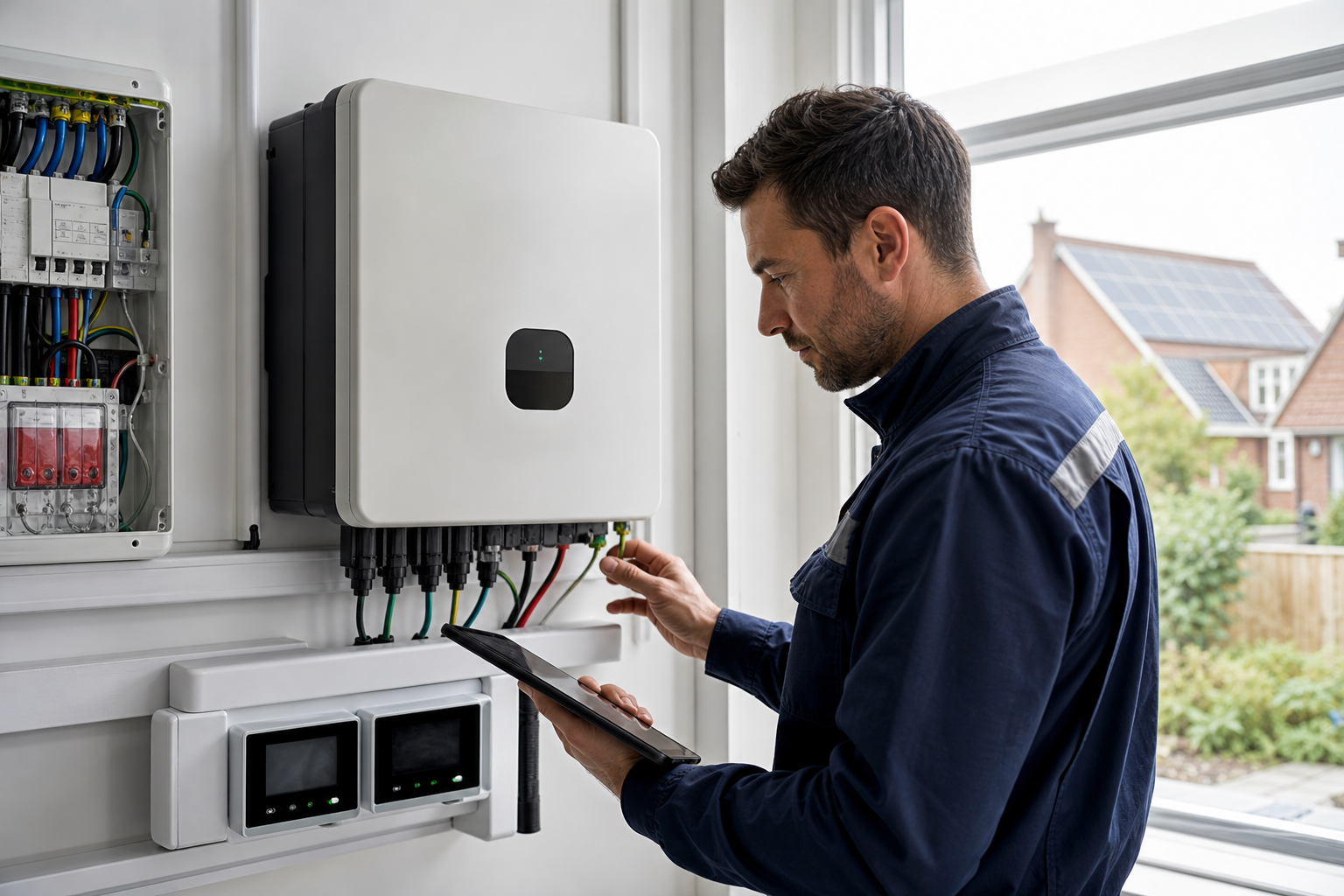
An experienced solar engineer will not simply reset the inverter and leave. Proper diagnosis may include reviewing fault logs, testing AC and DC voltages, checking insulation resistance, inspecting connectors and isolators, assessing thermal conditions, reviewing monitoring data and confirming that firmware and system settings are correct. On battery-equipped systems, the inspection should also verify communications, charging behaviour and backup configuration.
This approach matters because a recurring warning can be a symptom rather than the root cause. Replacing an inverter without testing the wider installation may leave an underlying cabling, grid or panel issue unresolved.
Protecting long-term solar performance
Planned maintenance is the practical way to find small issues before they become lost generation or a full shutdown. The right schedule depends on system age, site conditions, equipment type and whether the installation includes batteries, EV charging or complex commercial controls. A clean, accessible domestic installation may need less attention than a large system exposed to dust, bird activity, heat or heavy operational use.
Quality installation and aftercare make a difference here. Premium components, correctly designed cable routes and clear monitoring give faults fewer places to hide. For existing systems, a professional health check can provide a clearer picture of output, safety and future maintenance needs than app data alone.
Angus Renewables provides tailored support for solar PV and energy storage systems, helping property owners identify faults accurately and maintain the dependable performance that makes renewable energy worthwhile. A clear error code is useful, but a careful diagnosis is what protects your generation, savings and confidence in the system.


Comments