
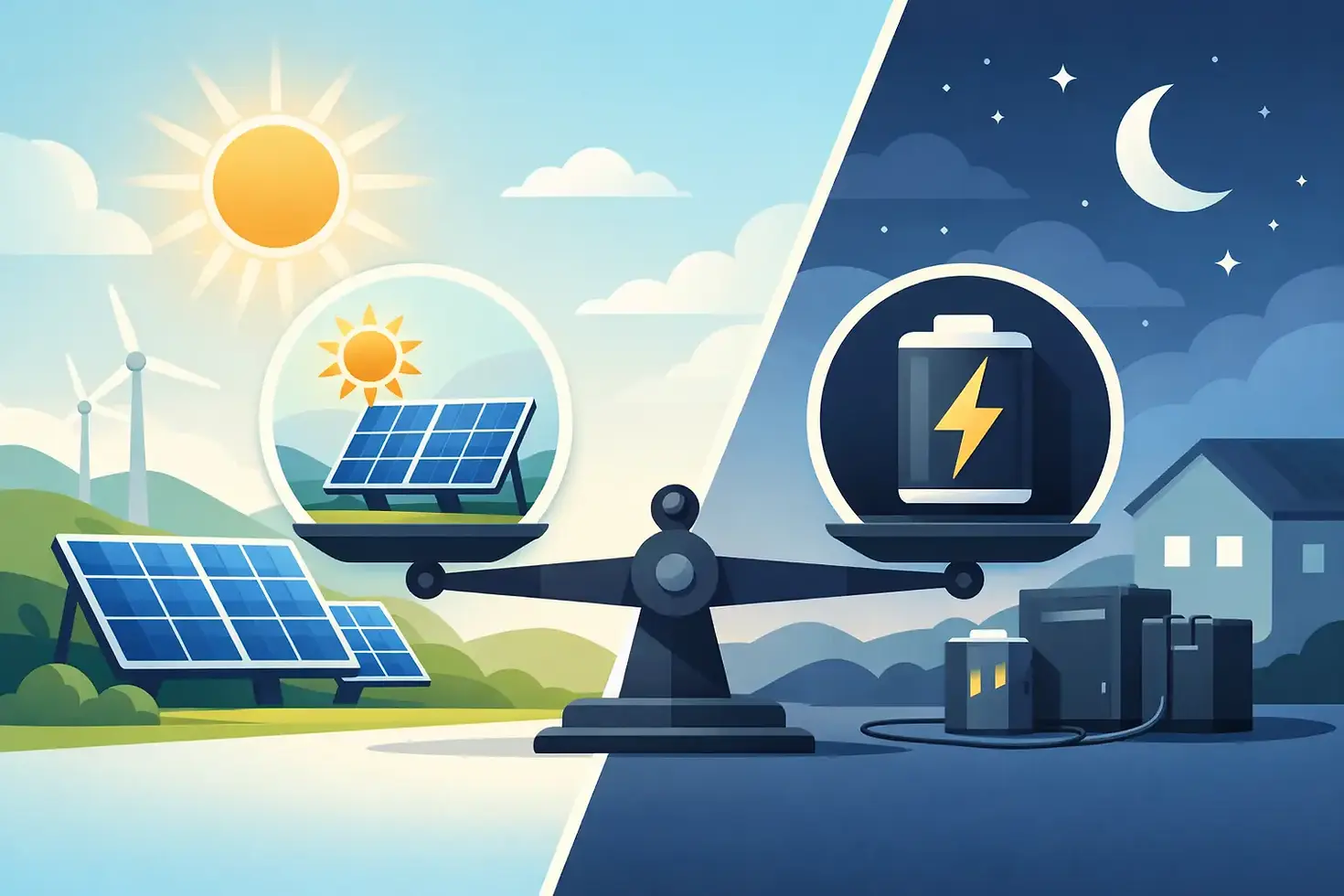
Solar Panels vs Battery Storage: Which First?
If you are weighing up solar panels vs battery storage, the real question is usually not which technology is better in isolation. It is which investment will make the biggest difference to your property, your energy bills and your long-term resilience. For most homes and businesses, the right answer depends on how and when you use electricity, whether you already have solar installed, and how much control you want over rising energy costs.
This is where many property owners get stuck. Solar panels are the visible part of the system, and they often get the most attention. Battery storage feels like the smart upgrade that makes everything work harder. Both can deliver strong returns, but they solve different problems. A well-designed system starts by matching the technology to the building, the usage pattern and the budget, rather than forcing a standard package.
Solar panels vs battery storage: what is the difference?
Solar panels generate electricity when there is daylight. They reduce the amount of power you need to buy from the grid, and that is usually where the biggest day-to-day savings begin. If your property uses a lot of electricity during daylight hours, solar can make an immediate and noticeable difference.
Battery storage does not generate electricity. It stores electricity for use later. That stored energy might come from your solar panels, or in some cases from the grid during cheaper off-peak periods. The main benefit is flexibility. Instead of exporting unused solar generation in the middle of the day and then buying electricity back at a higher rate in the evening, you keep more of that power on site.
So the comparison is not really generation versus generation. It is generation versus storage. One reduces reliance on imported electricity by producing your own power. The other improves how efficiently you use that power.
Which saves more money first?
In many cases, solar panels deliver the stronger first step because they create the energy savings in the first place. If your roof is suitable and your daytime consumption is meaningful, solar typically offers the clearest path to reducing imported electricity. For households, that may mean lower daytime running costs from appliances, home working and general usage. For commercial and industrial sites, it can be even more compelling where operations run through the day.
Battery storage often becomes more valuable once there is surplus energy to store or where electricity tariffs make time-shifting worthwhile. Without solar, a battery can still help by charging during cheaper periods and discharging when rates are higher, but the financial case is usually more sensitive to tariff structure and usage habits.
That is why the answer is often practical rather than theoretical. If you have no solar at all, solar panels are usually the stronger first investment. If you already have solar and export a lot of unused energy, battery storage can significantly improve the value of the system you already own.
When battery storage makes more sense first
There are situations where battery storage deserves to come first. If a property already has a solar PV system but sends a large share of generation back to the grid, adding a battery can improve self-consumption and increase savings without changing the panels. This is common in homes that are empty for much of the day, as well as businesses with uneven operating hours.
Battery storage can also be attractive where resilience matters. If you are concerned about power disruption, site continuity or protecting key equipment, storage can add a layer of energy security that solar alone cannot provide. Not every battery system offers backup capability as standard, so this needs to be designed properly from the outset, but for some customers it is a major factor.
There is also the tariff angle. Some battery systems are paired with smart tariffs to buy electricity when it is cheapest and use it later. That can be useful even without solar, though the performance depends on your supplier, tariff access and consumption pattern. In other words, batteries can be highly effective, but only when the numbers are worked through carefully.
Solar panels vs battery storage for homes
For homeowners, the decision often comes down to occupancy and evening usage. If someone is at home during the day, solar panels can offset a healthy portion of daily demand straight away. If the house is empty until late afternoon, more of that solar generation may be exported unless a battery is added.
A battery becomes especially valuable when a household uses most of its electricity after sunset. Cooking, lighting, laundry, entertainment and EV charging can all shift demand into the evening. In that case, storing daytime solar for later use can make the whole system more cost-effective.
Roof suitability still matters. A good solar installation depends on orientation, shading, available space and structural condition. If roof limitations reduce generation potential, the role of battery storage needs to be considered more carefully because there may be less surplus energy to store. This is exactly why tailored system design matters more than broad assumptions.
Solar panels vs battery storage for commercial sites
Commercial and industrial sites usually have a different load profile, which can change the recommendation. Many businesses use a large amount of electricity during daylight hours, making solar panels highly effective because generation and demand line up naturally. Offices, warehouses, manufacturing facilities and agricultural buildings can all benefit where daytime consumption is consistent.
Battery storage comes into its own when demand peaks at specific times, where there are concerns around continuity, or where tariff management offers a clear advantage. For some organisations, that means reducing peak grid reliance. For others, it means storing excess solar and improving overall site efficiency.
The important point is that commercial returns are rarely based on equipment alone. They depend on operational patterns, metering arrangements, available installation space and future plans. A site considering EV charger integration, expansion or electrification of plant may need a different design from one focused purely on immediate bill reduction.
Why a combined system is often the best answer
The strongest long-term result is often not solar panels or battery storage. It is solar panels with battery storage, designed as one joined-up system. Solar produces low-carbon electricity on site. The battery stores surplus generation for later use. Together, they improve self-sufficiency, reduce reliance on imported power and create more control over when energy is used.
That said, not every property needs the full package on day one. Some customers start with solar and add a battery later. Others install a battery-ready solar inverter so the system can be expanded when budgets allow. This staged approach can work well as long as it is planned properly from the beginning.
A rushed installation can leave value on the table. An integrated design considers panel output, inverter specification, battery capacity, usage trends and future upgrades such as EV charging. It should also account for product quality, installer accreditation and aftercare support, because long-term performance depends on more than the initial quote.
How to decide which should come first
The cleanest way to decide is to look at your actual energy behaviour. If you want to cut daytime grid use and you have a suitable roof, solar is often the logical starting point. If you already generate solar power and want to keep more of it on site, battery storage may offer the better next move. If resilience and tariff management are central concerns, a battery-led discussion may be appropriate even before new panels are installed.
Budget matters, but so does timing. Installing the cheapest option first is not always the most cost-effective decision over the life of the system. A properly specified solution should be built around how the property performs now and how it is likely to perform in future.
That is why a consultative approach matters. Angus Renewables works with homeowners and commercial clients to design systems around real usage, site conditions and long-term goals rather than fixed packages. Whether the right answer is solar first, battery first or a combined installation, the best outcome comes from clear technical advice, premium components and a system designed to do the job properly.
If you are still deciding between the two, start with the problem you want to solve. Lower bills, better energy independence and stronger resilience all matter, but the right route depends on which of those matters most to your property today.


Comments